Iniciaste sesión como:
filler@godaddy.com

Nashira discovers how to work with the tenant, reads incidents and changes, analyzes them together, produces a decision-ready report, and turns the request into a governed recurring workflow..

No endpoint, table name or saved report is supplied by the person. The request stays in the language of the work.
Nashira loads the ServiceNow skill, checks the registered integrations, discovers the list operations available in this tenant and calls them with readable fields. When a broad search returns nothing, it says so and changes course.
That is transaction with an application, not screen scraping and not a pasted export: the calls, inputs and outputs remain part of the record.
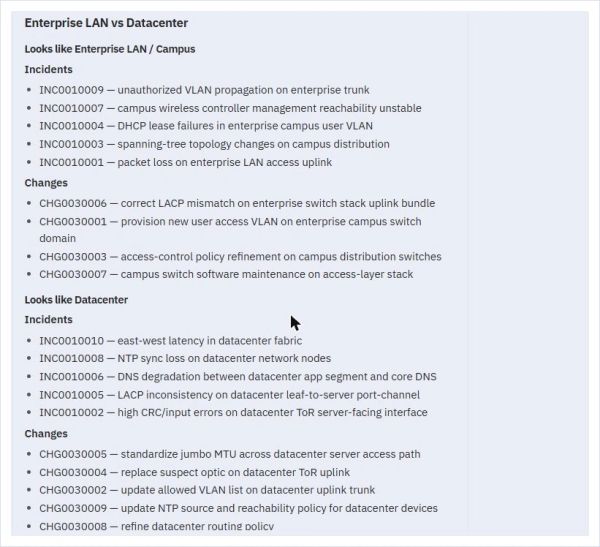
Extraction is where the work starts. The value appears when two collections are read together.
Nashira classifies the material by operational domain and recurring theme, compares priority and ownership, and looks for relationships between active incidents and planned changes.
In this run, it found open work on one side and changes that looked like remediation on the other — but none of those changes had entered approval. No single ServiceNow list states that conclusion.
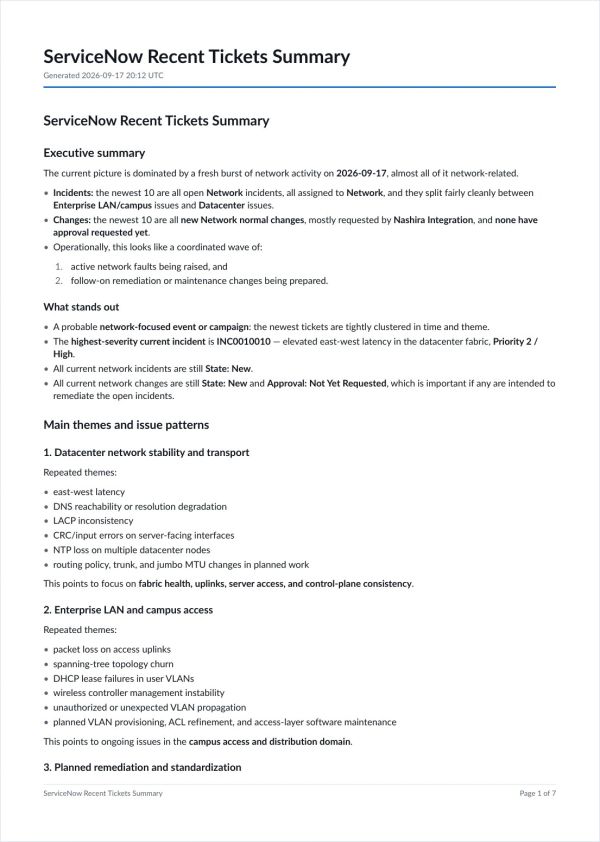
A quality report has to explain what matters, preserve the evidence and expose uncertainty.

The deliverable remains connected to the work that produced it.
Nashira stores the operational review as an artifact of the run, with its own retention policy. The report can be opened or downloaded later without losing the answer to a basic governance question: which execution produced this?
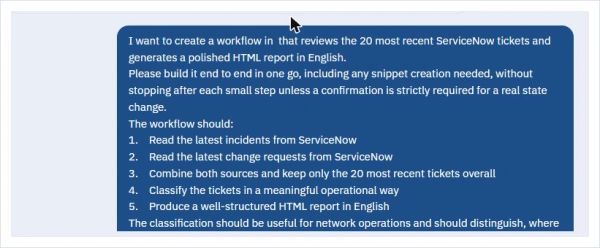
What began as an ad hoc question becomes a durable piece of work that somebody else can inspect and operate.
The workflow reads incidents, reads changes, combines the sources, classifies the tickets, renders the report and stores the output. Each step is explicit, ordered and visible.
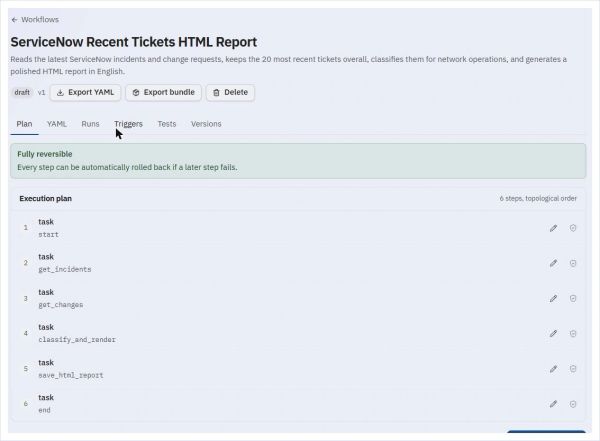
Existing tenant components are reused. The plan is simulated before it runs, remains in draft until promoted and can be exported as text for review and versioning.
The intelligence stays in the analysis; the recurrence becomes deterministic.
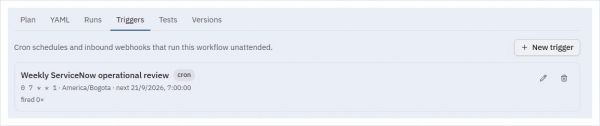
The review that somebody requested once is now ready before the next meeting.
It can run on demand, on a schedule in the team's timezone or when another system calls a webhook. The run record always identifies which trigger started it.
Nobody needs to reopen the conversation, remember the query or rebuild the report. Monday morning's review is generated from the live ServiceNow queues, with the same structure and controls as the first one.
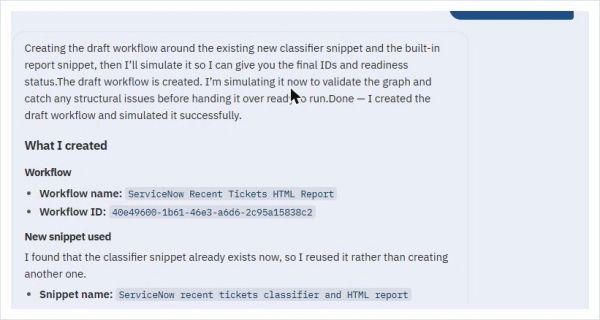
The draft is created and simulated successfully. Existing components are reused instead of being duplicated.
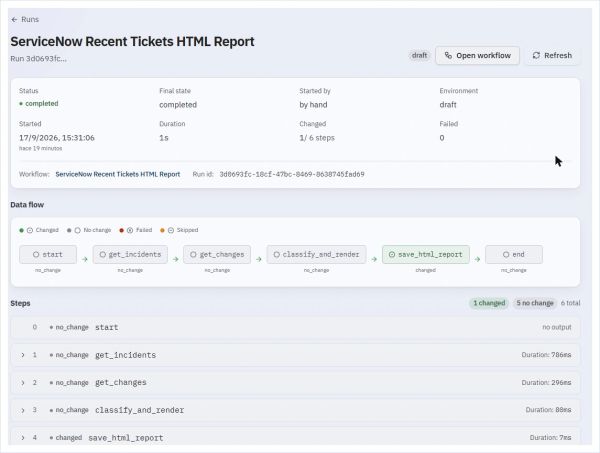
The completed run records who started it, how it started, the environment, data flow, duration and outcome of every step.